Same Plant, Radically Different Effects
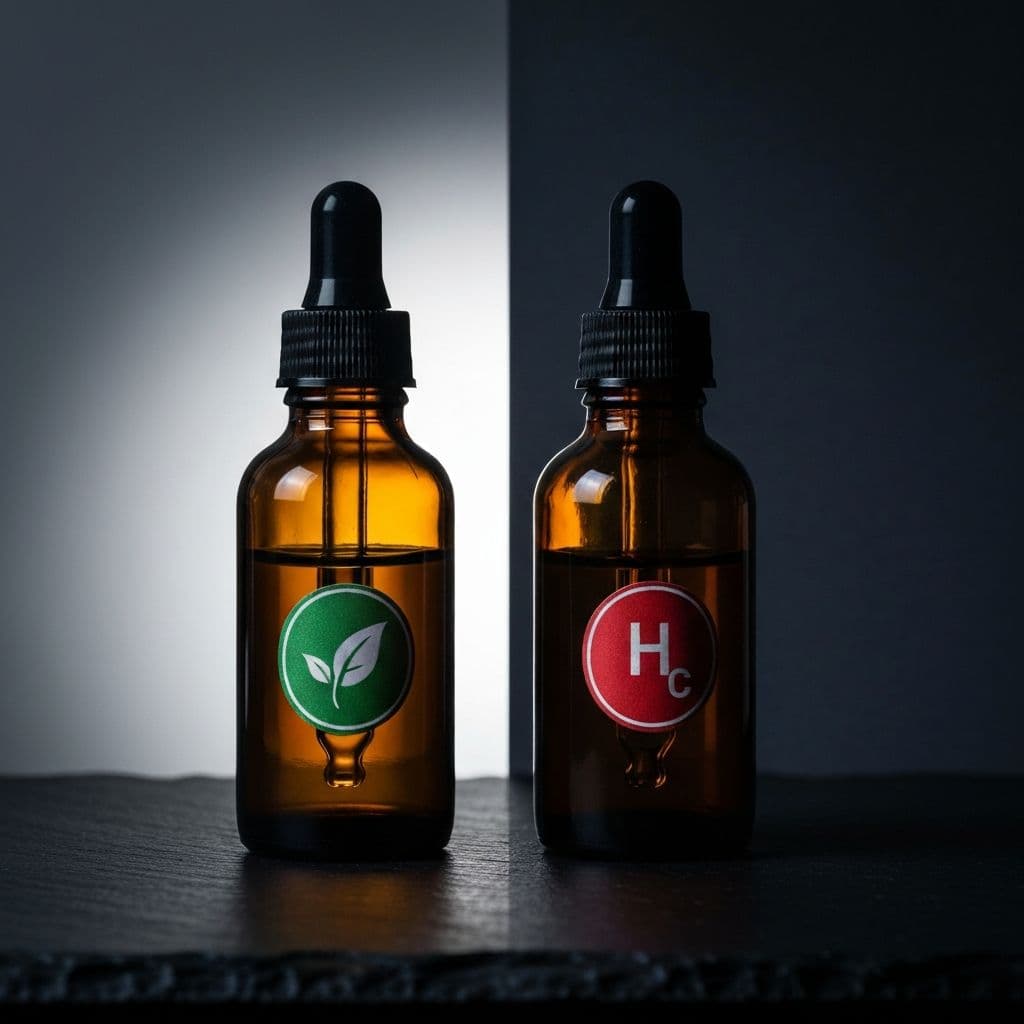
Cannabidiol (CBD) and tetrahydrocannabinol (THC) are both cannabinoids derived from the Cannabis sativa plant. They share the same molecular formula (C21H30O2), but differ in atomic arrangement — a small structural difference that produces dramatically different effects on the human body and mind.
Understanding these differences is essential for anyone navigating the rapidly expanding cannabinoid market and making informed decisions about which compounds may serve their health goals.
The Psychoactivity Question
The most fundamental distinction is psychoactivity. THC is psychoactive — it produces the characteristic "high" associated with cannabis use. CBD is not psychoactive in the same sense. It does not produce intoxication, euphoria, or impairment of cognitive function.
The reason lies in their different interactions with the endocannabinoid system:
- THC is a direct agonist of CB1 receptors, which are concentrated in brain regions governing memory, pleasure, time perception, and coordination. Direct CB1 activation produces psychoactive effects.
- CBD does not bind meaningfully to CB1 receptors. Instead, it modulates the ECS indirectly and acts on multiple other receptor systems (5-HT1A, TRPV1, GPR55). This produces therapeutic effects without intoxication.
Interestingly, CBD actually reduces THC's psychoactive effects when the two are taken together — by acting as a partial antagonist at CB1 receptors, CBD blunts THC-induced intoxication. This is one reason full-spectrum products with naturally occurring ratios of both compounds are often well-tolerated by individuals sensitive to THC.
Medical Applications
Both compounds have legitimate medical applications, but for different conditions:
THC's Primary Medical Uses
- Chemotherapy-induced nausea and vomiting (FDA-approved dronabinol/nabilone)
- Appetite stimulation in HIV/AIDS wasting syndrome
- Spasticity in multiple sclerosis
- Severe chronic pain where other treatments have failed
- Glaucoma (intraocular pressure reduction)
CBD's Primary Medical Uses
- Treatment-resistant epilepsy (FDA-approved Epidiolex)
- Anxiety disorders
- Sleep disorders
- Inflammatory conditions and pain
- Potential neuroprotective applications
Legal Status
Legal status represents another critical difference:
- THC remains a Schedule I controlled substance at the federal level in the United States. It is legal for medical and/or recreational use in many states, but illegal at the federal level and in numerous states.
- CBD derived from hemp (cannabis with less than 0.3% THC) was federally legalized by the 2018 Farm Bill. It is legal in most states, though some restrictions persist in certain jurisdictions.
This legal distinction is practically significant: CBD products derived from hemp are widely available nationwide, while THC products are limited to states with medical or recreational cannabis programs.
Side Effect Profiles
The side effect profiles differ substantially:
- THC side effects: Euphoria/intoxication, impaired memory and reaction time, increased heart rate, anxiety or paranoia (especially at high doses or in predisposed individuals), dry mouth, red eyes, appetite increase.
- CBD side effects: Generally well-tolerated. Potential effects at high doses include drowsiness, dry mouth, diarrhea, and reduced appetite. CBD can inhibit cytochrome P450 enzymes, affecting metabolism of certain medications.
"The absence of psychoactivity is what makes CBD suitable for daily use by a broad population — from executives to elderly patients — for whom THC's intoxicating effects are impractical or unwanted."
The Entourage Effect: When CBD and THC Work Together
While CBD and THC differ profoundly when used alone, emerging research suggests they may work synergistically when combined. The "entourage effect" hypothesis proposes that the full spectrum of cannabinoids, terpenes, and flavonoids in the cannabis plant work together to produce effects greater than any single isolated compound.
Practical implications:
- Full-spectrum CBD products (containing trace THC up to 0.3%) may be more effective than CBD isolate for many applications
- Higher CBD:THC ratios (20:1, 10:1) can provide therapeutic benefits with minimal intoxication
- In legal medical cannabis states, specific CBD:THC ratios can be selected for targeted therapeutic goals
Drug Testing Considerations
Standard drug tests screen for THC metabolites, not CBD. However, full-spectrum CBD products containing trace amounts of THC (legal limit: 0.3%) can, with consistent high-dose use, potentially produce enough THC metabolite accumulation to trigger a positive drug test. For individuals subject to drug testing, broad-spectrum or CBD isolate products with verified zero THC content are the safer choice.
Conclusion
CBD and THC are distinct compounds with different mechanisms, therapeutic applications, legal statuses, and safety profiles. Understanding these differences allows informed decision-making about which compounds serve specific health goals. For most people seeking daily wellness supplementation, CBD's favorable safety profile and non-psychoactive nature make it the practical starting point — with THC-containing products reserved for specific therapeutic applications in appropriate legal contexts.