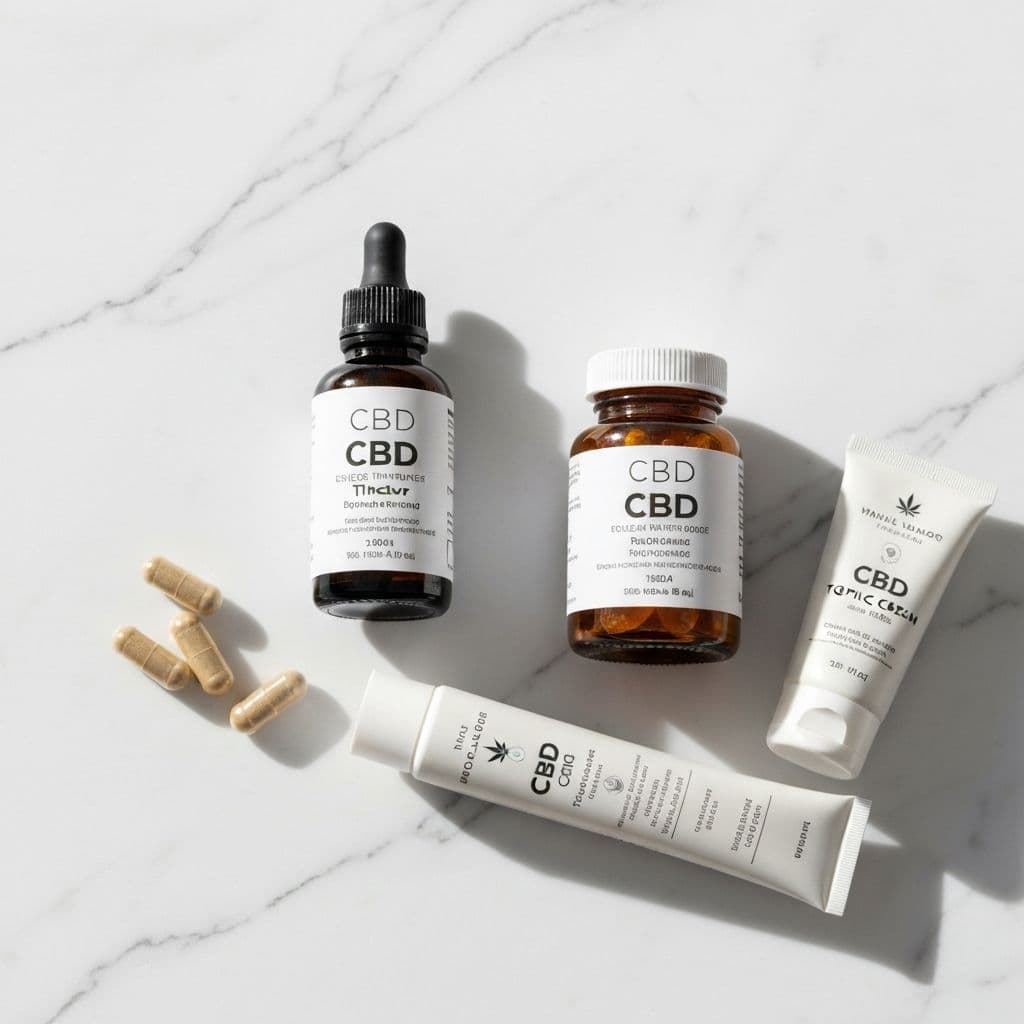
Why Dosing Is the Most Important Variable
The most common reason CBD "does not work" for people is incorrect dosing. Unlike many pharmaceuticals with established weight-based dosing protocols, CBD dosing is highly individual — influenced by body weight, metabolism, the endocannabinoid system's baseline tone, the specific condition being addressed, the delivery format used, and the quality of the product.
The good news: CBD has an excellent safety profile with no known lethal dose in humans, making the titration process relatively low-risk. The primary cost of incorrect dosing is wasted product and missed therapeutic benefit — not safety risk.
Understanding Bioavailability
Not all CBD you consume reaches your bloodstream. Bioavailability — the percentage of consumed CBD that achieves systemic circulation — varies dramatically by delivery method:
- Inhalation (vaping): 34–56% bioavailability
- Sublingual tincture: 20–35% bioavailability
- Oral capsules/edibles: 6–15% bioavailability
- Nanoemulsion/water-soluble: up to 4x improved over standard oral
- Topical: minimal systemic; high local tissue concentration
This means a 50mg dose from a sublingual tincture delivers roughly 2–3x more CBD to your system than the same 50mg in a capsule. Factor this into your dosing calculations.
The Start Low, Go Slow Protocol
The universally recommended approach to CBD dosing is titration: beginning at a low dose and incrementally increasing until the desired effect is achieved.
Week 1-2: Orientation Phase
Start at 10–15mg CBD daily. This dose is below the therapeutic threshold for most people but allows you to assess your individual tolerance and observe any immediate reactions. Take notes on how you feel — sleep quality, anxiety levels, pain ratings — to establish a baseline for comparison.
Week 3-4: Titration Phase
If no significant effect at week 2, increase to 25mg daily. Maintain this dose for another two weeks and track outcomes. Many people find their optimal dose in the 25–50mg range for general wellness and mild anxiety.
Week 5+: Optimization Phase
If 25mg is insufficient, continue increasing by 10–15mg increments every 1–2 weeks. Keep titrating until you achieve the desired effect, then maintain at that dose. Most therapeutic effects plateau at some point — continuing to increase dose beyond the optimal level does not produce additional benefit and wastes product.
Condition-Specific Dose Ranges
While individual variation is significant, research provides useful starting benchmarks:
- General wellness / stress management: 10–30mg daily
- Mild anxiety: 25–75mg daily
- Moderate anxiety / sleep issues: 50–150mg daily
- Chronic pain: 50–150mg daily
- Severe anxiety / acute situational use: 150–600mg (research doses for SAD)
- Inflammatory conditions: 50–150mg daily
Note that the doses used in clinical research are often substantially higher than what most commercial products provide. A 30ml tincture labeled "300mg CBD" contains only 10mg per ml — meaning a single 1ml serving is dramatically below research-level doses for anything beyond general wellness.
Timing and Consistency
CBD's effects accumulate over time. The endocannabinoid system requires consistent stimulation to adapt and upregulate receptors. Most people need 2–4 weeks of daily use before experiencing the full therapeutic benefit.
Optimal timing varies by use case:
- Anxiety management: morning dose to set a calm baseline, with an optional additional dose during high-stress periods
- Sleep: 1–2 hours before intended sleep time
- Pain: split dosing (morning + evening) maintains consistent blood levels
- Pre-event anxiety: 1–2 hours before the stressful event
"Consistency is the most important dosing principle. A moderate dose taken daily for four weeks will produce dramatically better results than a high dose taken occasionally."
Body Weight and Individual Factors
A rough body weight guideline used by many practitioners:
- Under 130 lbs: 11mg low dose, 15mg medium, 17mg high
- 130–230 lbs: 18mg low dose, 23mg medium, 27mg high
- Over 230 lbs: 23mg low dose, 30mg medium, 45mg high
These are starting points only. Individual variation based on ECS baseline tone, liver metabolism (particularly CYP2C19 enzyme activity), and the specific condition being treated means these numbers require personal adjustment.
Signs You Are Underdosing
- No noticeable effect after 2+ weeks of consistent use
- Temporary mild effect that fades quickly
- Effect only noticeable on high-dose days
Signs of Overdosing
CBD is remarkably well-tolerated even at high doses, but potential signs you have exceeded your optimal dose include:
- Excessive drowsiness or fatigue (at doses not intended for sleep)
- Mild nausea or gastrointestinal discomfort
- Dry mouth more pronounced than desired
- Paradoxical increase in anxiety (rare, typically at very high doses)
If any of these occur, reduce dose by 25% and re-titrate from that lower point.
Conclusion
CBD dosing is a process, not a prescription. The titration approach — starting low, increasing gradually, tracking outcomes, and maintaining consistency — is the framework that produces reliable results. Most CBD failures are dosing failures: insufficient dose, inconsistent use, or incorrect timing. Apply the principles in this guide systematically and give the process the 4–8 weeks it requires to reveal its full potential.