
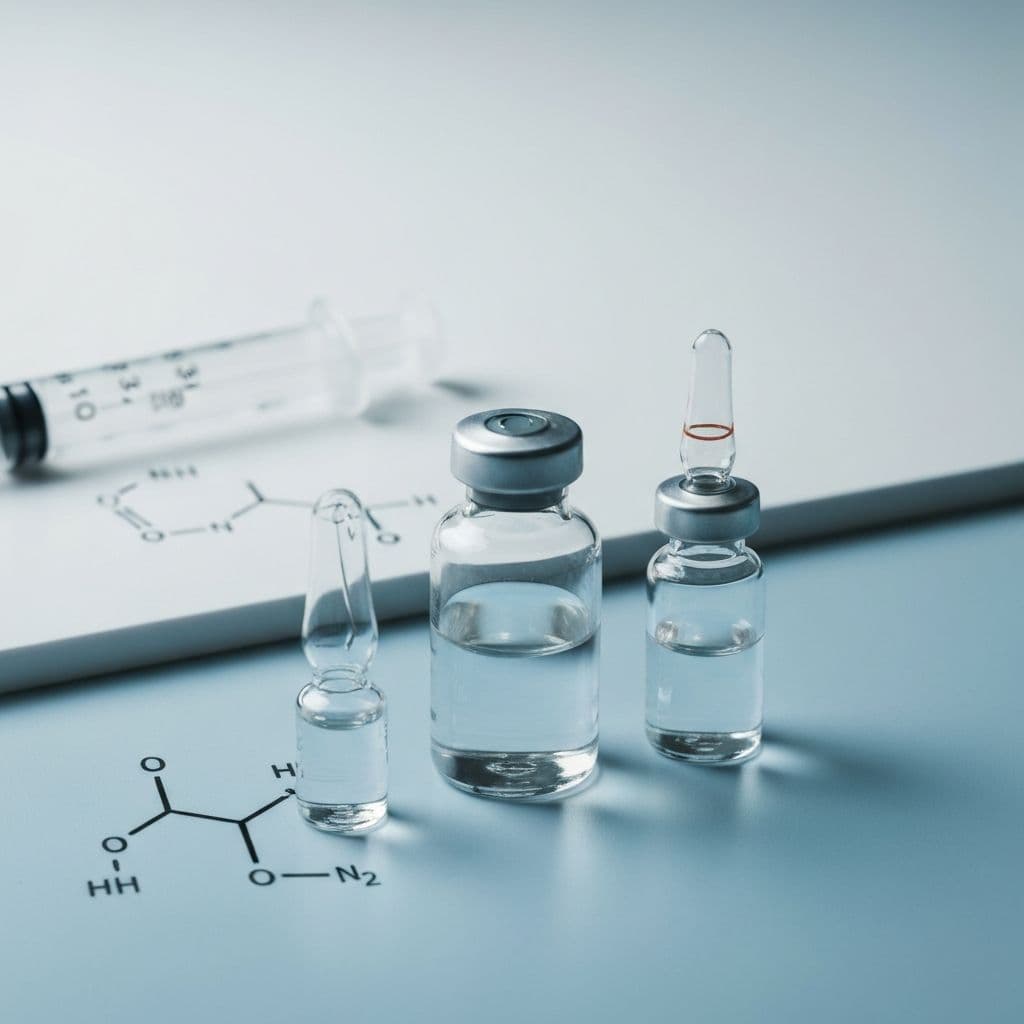
What Are Peptides?
Peptides are short chains of amino acids — the building blocks of proteins. When peptides are fewer than 50 amino acids in length, they're classified as peptides; longer chains become proteins. The body naturally produces thousands of peptides that serve as biological signaling molecules, hormones, and enzymes.
Therapeutic and performance peptides are compounds — either naturally occurring or synthesized — that amplify or mimic specific biological signals in the body to achieve targeted physiological effects.
BPC-157: The Body Protection Compound
BPC-157 is a synthetic peptide derived from a naturally occurring protein in gastric juice. It has generated enormous interest in performance and medical communities for its remarkable tissue healing properties.
Animal research has demonstrated BPC-157's ability to:
- Dramatically accelerate tendon and ligament healing
- Repair muscle tissue damage
- Heal intestinal damage (including fistulas and inflammatory bowel conditions)
- Protect against systemic organ damage from NSAIDs and alcohol
- Exert neuroprotective effects
"BPC-157 has consistently produced results in animal models that challenge our understanding of tissue regeneration timelines."
Human clinical trials are limited, but the mechanism — promotion of angiogenesis (new blood vessel formation) and upregulation of growth factor receptors — is well-understood and plausible.
TB-500 (Thymosin Beta-4)
Thymosin Beta-4 is a naturally occurring peptide found in virtually all human tissues. It plays critical roles in tissue repair, wound healing, and cellular migration.
As a therapeutic peptide, TB-500 has shown promise for:
- Accelerating healing of acute injuries (muscle tears, tendinopathies)
- Reducing inflammation at injury sites
- Promoting cardiac tissue repair following injury
- Improving flexibility and reducing pain from connective tissue injuries
Growth Hormone Secretagogues
This class of peptides stimulates the pituitary gland to produce and release more growth hormone (GH) — without the direct administration of synthetic GH.
Key peptides in this category include:
- Sermorelin — GHRH analogue; stimulates natural GH release; approved for medical use
- CJC-1295 — longer-acting GHRH analogue with sustained GH elevation
- Ipamorelin — selective GH secretagogue with minimal cortisol and prolactin elevation
- Tesamorelin — FDA-approved for lipodystrophy; reduces visceral fat
The appeal of GH secretagogues over synthetic HGH is that they work within the body's natural feedback loops, reducing the risk of completely suppressing endogenous GH production.
Epithalon: The Longevity Peptide
Epithalon (Epitalon) is a synthetic tetrapeptide that has generated significant interest in anti-aging research. Its primary mechanism is the activation of telomerase — the enzyme responsible for maintaining telomere length.
Telomeres are the protective caps at the end of chromosomes. Their progressive shortening with age is a primary mechanism of cellular aging. Epithalon's ability to activate telomerase and potentially extend telomere length positions it as one of the most theoretically interesting anti-aging compounds in existence.
Regulatory and Safety Considerations
The legal status of therapeutic peptides varies significantly by jurisdiction and peptide. In the United States:
- Some peptides (Sermorelin, Tesamorelin) are FDA-approved prescription medications
- Others exist in regulatory grey areas as "research chemicals"
- BPC-157 is not FDA-approved; the FDA issued guidance restricting its compounding in 2022
Quality sourcing is absolutely critical with peptides. Contaminated or misdosed products are a significant risk in an unregulated market. Third-party tested sources and medical supervision are strongly recommended.
Conclusion
Therapeutic peptides represent one of the most scientifically exciting frontiers in human performance and longevity medicine. While human clinical data lags behind animal research for many compounds, the mechanistic understanding is sophisticated and the results in research settings are compelling. As this field matures, peptide therapy is poised to become a mainstream component of precision medicine and performance optimization.
This article is informational only. Consult a qualified physician before using any therapeutic peptides.