What Is Moringa?
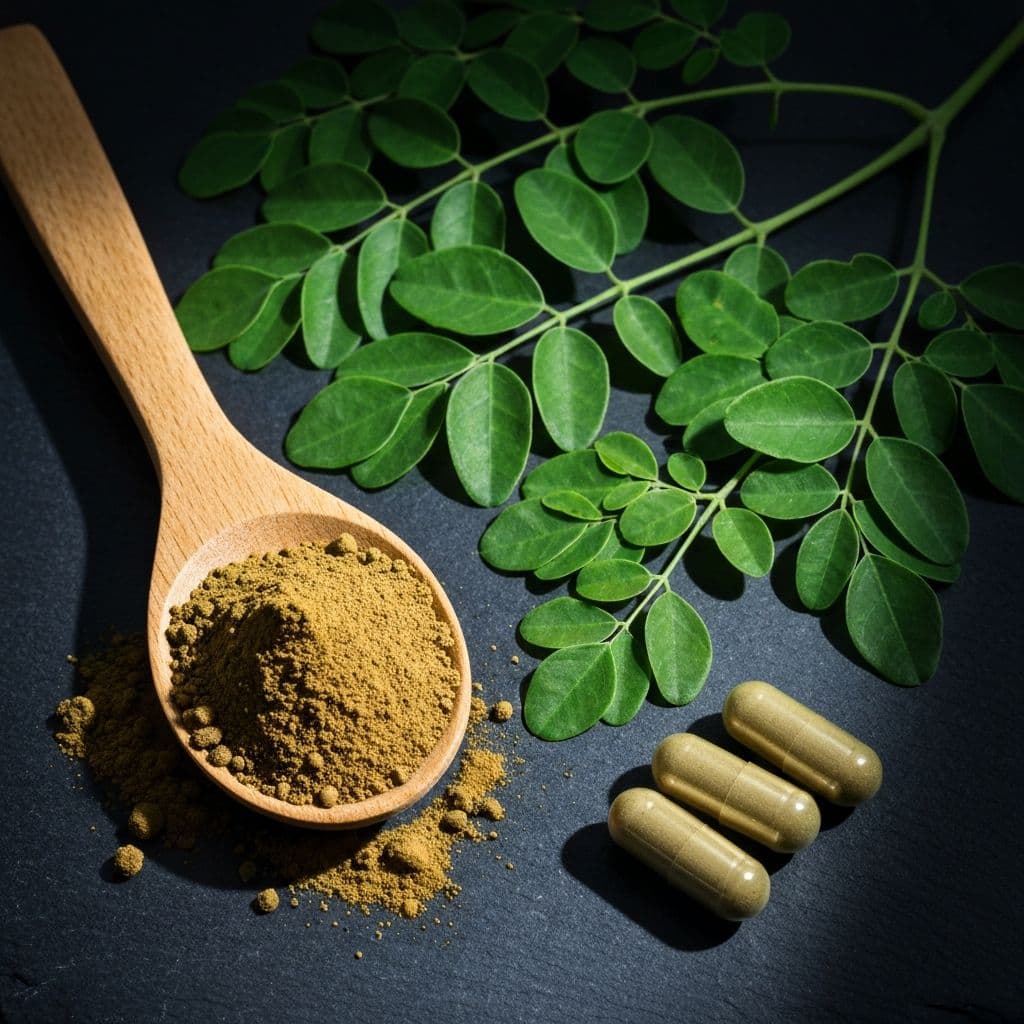
Moringa oleifera — known as the "Miracle Tree" or "Tree of Life" — is a fast-growing tree native to the foothills of the Himalayas in South Asia. Nearly every part of the tree is edible and medicinal: leaves, pods, seeds, roots, and bark have all been used in traditional medicine for thousands of years.
Modern nutritional science has confirmed what ancient healers knew intuitively: moringa is one of the most nutrient-dense plants ever documented.
Nutritional Profile
Gram for gram, dried moringa leaf powder contains:
- 9x the protein of yogurt
- 10x the vitamin A of carrots
- 15x the potassium of bananas
- 17x the calcium of milk
- 12x the vitamin C of oranges
- 25x the iron of spinach
This nutrient density is virtually unmatched in the plant kingdom, which is why nutritional organizations worldwide have promoted moringa as a solution to malnutrition in developing countries.
The Complete Amino Acid Profile
One of moringa's most remarkable qualities is that it contains all nine essential amino acids — making it a complete protein source from a plant. This is extremely rare in the plant world and makes moringa particularly valuable for vegans and vegetarians who struggle to obtain complete proteins from plant sources alone.
Anti-Inflammatory & Antioxidant Power
Moringa contains over 46 different antioxidants, including quercetin, chlorogenic acid, and beta-carotene. These compounds neutralize free radicals and reduce systemic inflammation — the root driver of most chronic diseases including cardiovascular disease, diabetes, and cancer.
"Moringa's isothiocyanates are among the most potent anti-inflammatory compounds found in any food source."
Blood Sugar Regulation
Multiple human studies have demonstrated moringa's ability to reduce blood glucose levels. The isothiocyanates and chlorogenic acid in moringa slow sugar absorption in the gut and improve insulin sensitivity at the cellular level.
In one study, participants who consumed 7g of moringa leaf powder daily showed a 13.5% reduction in fasting blood sugar levels over 3 months.
Cholesterol and Heart Health
Animal and human studies show moringa significantly lowers LDL cholesterol (the "bad" kind) while maintaining or raising HDL (the "good" kind). The mechanism appears to involve beta-sitosterol, a plant sterol that competes with dietary cholesterol for absorption in the intestine.
How to Use Moringa
Moringa is most commonly consumed as a powder made from dried leaves. Practical applications include:
- Added to smoothies (1–2 teaspoons daily)
- Stirred into soups or stews after cooking
- Mixed into energy balls or protein bars
- Taken as capsules for convenience
- Brewed as moringa tea from dried leaves
Start with 1 teaspoon daily and gradually increase. The flavor is earthy and slightly bitter — similar to matcha.
Safety and Considerations
Moringa leaves are safe for most people at recommended doses. However, moringa root and root extracts should be avoided during pregnancy as they may cause uterine contractions. Those on diabetes or blood pressure medications should monitor levels carefully as moringa may amplify their effects.
Conclusion
Moringa is one of the rare cases where a food earns superlative descriptions honestly. The science backs the traditional wisdom. For those seeking to maximize their nutritional intake from whole food sources, moringa belongs in the daily rotation.